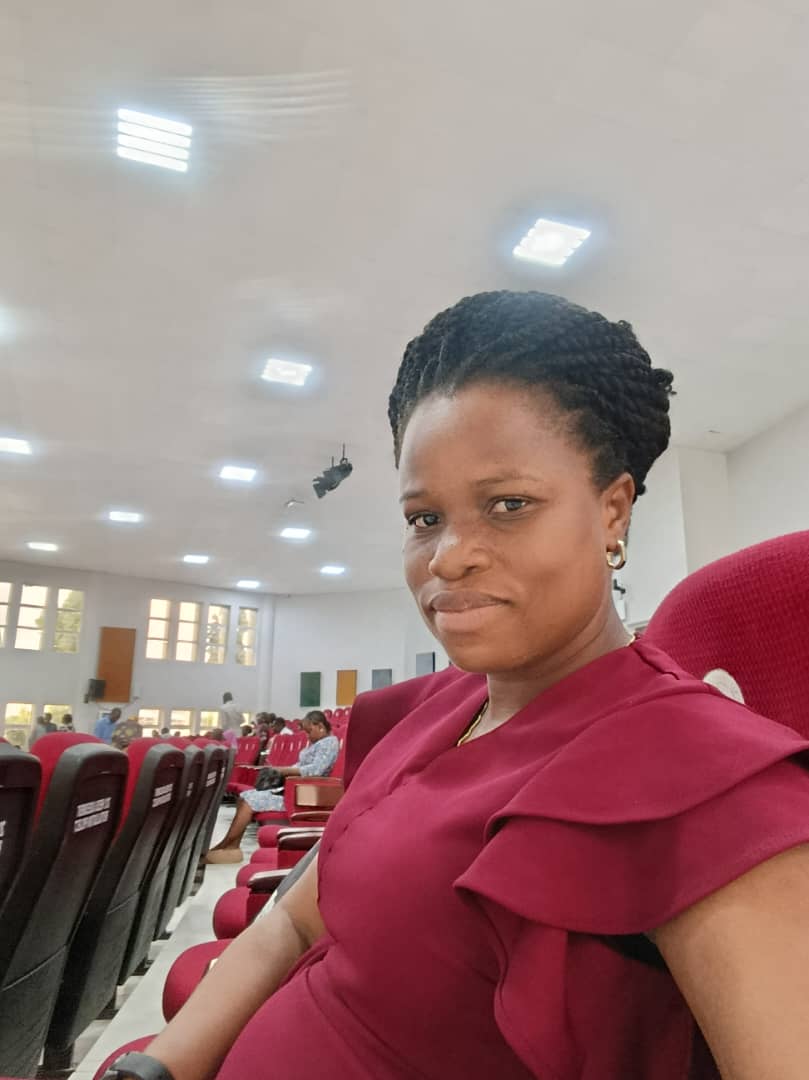





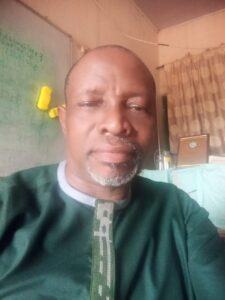
He is an authority in aquaculture with varied experiences at the global level.
Professor Kayode Shogbesan of the Department of Fisheries Modibbo
Adama University, Yola, has participated in research projects, some of
which he led,in Nigeria, Africa and Asia. He is not just involved in practical
works in the training of students, he is a veteran in the establishment and
management of fish farms. Professor Shogbesan has been involved in the
building of infrastructure to advance the study and the development of
aquaculture, improvement of feeds and solution to diseases in the
aquaculture sector, as well as contribute to efforts at achieving food
security.
A scholar who has done Nigeria proud in places like Kenya, Zambia and
India, working on projects that proffer solution to challenges in the practice
and development of aquaculture, Shogbesan has worked on projects
promoted by the government and international agencies towards improving
aquaculture in practically all the states in Nigeria. Aside from his
contribution to efforts at finding home grown solution to problems in the
sector, such as tools designed to reduce the pains of the farmer, he finds
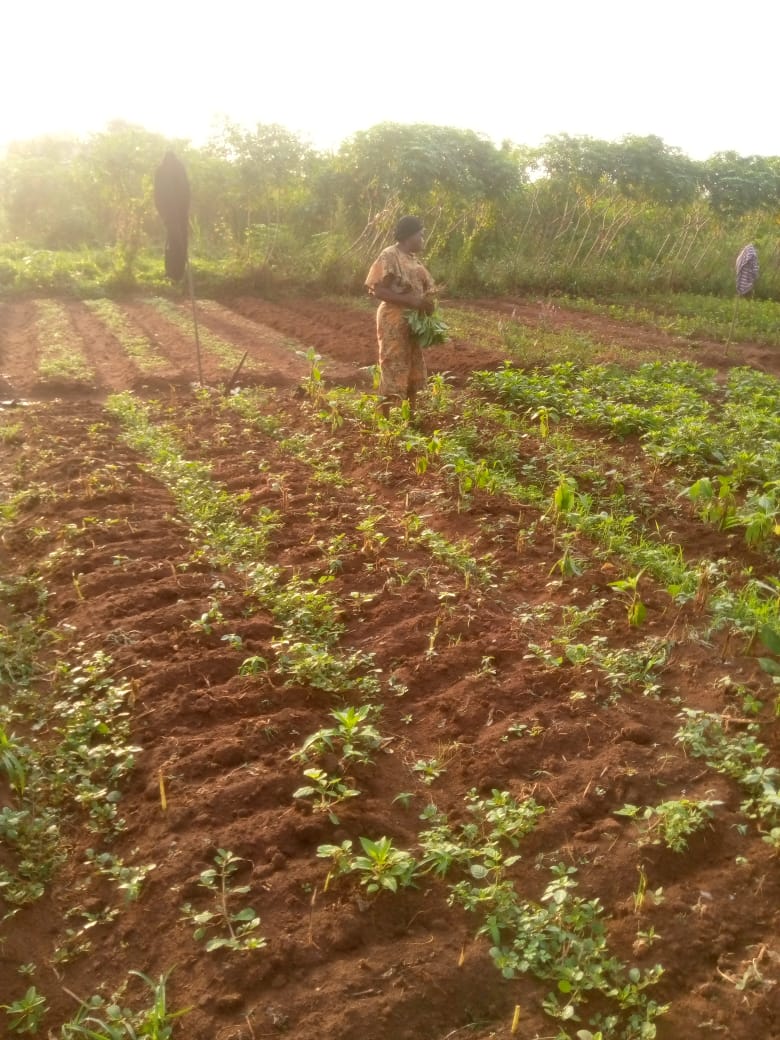
time in his busy schedule to practice what he teaches.
So, he is not just a teacher and consultant, he is also a farmer. In this interview with Taiwo
Farotimi and Aderemi Oladipupo, Professor Shogbesan dissects the
problems in the fishery sector in Nigeria, and points out the way out.
Excerpts:
Nigeria occupies the third position in Africa in fish production, yet we
cannot meet our local demand, and so we have to import. What are
the major factors limiting the efforts of the artisanal and the
aquaculture from providing the needed fish demand in Nigeria?
Thank you. You really made a very good point. But the question we should
ask is this ‘The third position we are talking about, is it in artisanal
production or is it in aquaculture production?’
Was it not arrived at from the consideration of the two?
Each of the two is divided into two. In artisanal we have the aquaculture
production and we have inland…in the inland fishery we are nowhere to be
found. It is only in aquaculture that the position you have said, the third, is
feasible. So, it is not our rank that is important. What is our population? As
the population is growing; production is supposed to grow.
Why are we still lacking? One, there are issues with both food security and
national security in the areas. Where the major inland fishery is coming
from, there is no way that you and I can get near the place. For instance,
Baga in Borno State. The fish that is coming from that place has practically
stopped. You can imagine having over one hundred trucks that were being
loaded to the southern part of the country every day being cut off (as a
result of the conflict with Boko Haram). In Adamawa State we have
supplies coming from Cameroun, there is also a challenge with Lake Chad.
The fish coming from Cameroun every day is valued at about One billion
naira, and it is distributed to different parts of the country. These are inland
fishery. Now, as the population is growing our production is supposed to
grow.
Then number two, there is what we call consumption per capita. The
consumption per capita of Nigeria is very low. It is just about 12 to 13.
While in other countries, you have 25 to 26. What we mean by that is the
kilogramme of fish you are supposed to take as a matured adult. …. There
is(also a problem with) the technical know-how of the people dealing with
these things. For instance, I can tell you that everybody is selling
fingerlings, but what is the quality of the fingerlings?
In fact, that is a major concern.
Still the reason the cost of fish is going up is because of the cost of
ingredients used in producing the feeds,…and the government does not
favour some of the chemicals used and the cost of the machines used in
producing the feeds; that the government did not remove the tariffs paid on
it. The tariff they pay on these things are still increasing. And a lot of people
are getting discouraged of getting into aquaculture.
Even when you produce fish, we do not have a standard laboratory to do
the chemical check on the products. And without the chemical check on the
products, we cannot sell some of these things outside. So, it is not that we
are not producing. That is really revealing. But since the creation of the ministry of
Marine and Blue Economy there have been talks about attempts to
restructure the fishery department for better production, and some of
these things touch on policies and government intervention. How
much of these has the ministry been able to do or is it that the
ministry is totally oblivious of those challenges?
The Ministry of Marine Resources and Blue Economy picked up fishery
from the Ministry of Agriculture and natural resources. At the beginning
there were a lot of issues; like where to pick the director from… I said
earlier that fishery has two legs: one is marine and the other is fresh water.
We have the Nigeria Institute of Oceanography and Marine Resources,
which directly speaks to the policies of Marine Resources and Blue
Economy; we have National Freshwater Fisheries Research,…, which
mandate does not fit into.. can you see the problem? So, the mandate of
the two research institutes that Nigeria created to monitor fishery in Nigeria
are different. So, in the wisdom of government, it should have created the
Ministry of Fishery Resources separately, and not ministry of Marine and
Blue economy.
So, you are saying that there should have been a different ministry for
fisheries?
Yes, you would then have fisheries, like you have a ministry for livestock.
But already we were complaining that we had too many ministries
even before the ministry of Marine Resources and Blue Economy was
created. Would that not be an additional burden on the cost of
running the government?
At the ….., when the government came up with this, we advised that
instead of moving fisheries to Marine Economy, that they should allow
fisheries to stay in agriculture or let us have fishery and livestock together.
Let us have ministry of livestock and fishery. … Now, tactically, the
department of fishery and aquaculture is dying a natural death. … There
should be a ministry of fishery and aquaculture in Nigeria. We have it in
other countries. Why cant we have it in Nigeria? If we can have ministry of
livestock, we should be able to have ministry of fishery. Nigeria is
generating revenue from fishery. ……
Yes.
There is no plan for fishery to be seen from the angle of marine and
freshwater. For example now, they don’t know where to put fishery in the
Agric Research Council of Nigeria. They are already out of the council.
Despite our production, we still have about 750 metric tons that we are
deficient from by the time we put the aquaculture production and the inland
production both from freshwater inland and also from marine, by the time
we put them together we are still lacking. Why are we still lacking? There
are issues of food security and national security in the country. Where the
major inland fishery is coming from there is no way you and I can get to
(that is)in Banga and Maiduguri (both in Borno State). The fish that is
coming from that place had practically stopped. That is one. You can
imagine where we have over 100 metric tons from moving every day down
to the southern part of the country and that place is cut off. The market
moves to Adamawa state. Also in Adamawa state, we have fish coming
from Cameroon they cannot come again from Chad. We receive fish from
Cameroon that is worth about One billion naira every week and that market
sells the fish to different parts of the country, these are inland fish. As
population is growing, definitely our production is supposed to grow.
Of course, yes
Then number two, there is what we call consumption per capital. The
consumption per capital of Nigeria is very-very low. It’s just about 12 point
something, about 12 to 13. When we have other countries with 25, 26
consumption per capital. By that we are talking about the kilogram of fish
you are supposed to consume as a mature adult. Number three, we have
challenges of development of aquaculture itself as an institute. And what
are the challenges? This may not be looked at as challenge but the
technical know-how of people producing the fish. I can tell you I am also
producing fingerlings, everybody is selling fingerlings, but what is the
quality of the fingerlings that you are selling?
In fact, it’s part of the issues we are going to raise
The reason why the cost of fish is high is because of the cost of theingredients used in producing the fish,
and government policy does not favour some of the chemicals that we use. Because we use chemicals.
When we talk about vitamins premise. Vitamins premise is not organic, it is
inorganic. So, the cost of this and the cost of the machine we use the
government did not remove the vat (value added tax) that people pay on it,
the rate people pay money on it is still increasing. That’s why I say
government policy does not favour some of the inputs in aquaculture
production, and a lot of people are getting discouraged in going into
aquaculture. Even when you produce the fish, we don’t have standard
laboratory to do what we call the chemical check on the product. Without
the chemical check on the product, we cannot sell some of these fish
outside (Nigeria). So, it is not that we are not producing.
I am the Vice President, Research and Training, for the Fishery Society of
Nigeria, which is the apex body, the society that anchors all the fishery
programmes in the nation. And when the government came up with this, we
advised that instead of moving fishery into Marine Economy it would have
been better to allow fishery to stay in Agriculture or merge Fishery and
Livestock together. Let us have Ministry of Livestock and Fishery, we will
know that we have two components that make up that Ministry then we will
be able to grow. Now I am going to tell you this that technically the
department of Fishery and Aquaculture is dying a natural death. I am telling
you the truth because they have called for writing the policy, we have
written the policy and they are still reviewing the policy on Fishery because
we made them to understand that there should be a ministry of fishery and
Aquaculture in Nigeria. We have that in other nations of the world, why
can’t we have it in our country? If we can have a Ministry of Livestock
Development, then we should be able to have a Ministry of Fishery. Nigeria
is benefitting from fishery resources and that Ministry will now make the
Fishery to grow very well and government will be able to create a lot of
GDP from fishery. Do you get what I am saying?
Yeah, I am with you
So, there was no plan, I am telling you the truth, there was no plan for
fishery to see it from the two angle that both from Marine and also from
Fresh water. Presently now they don’t know where to put Fishery in the
Agric Research Council of Nigeria.
Hen hen, so it is that bad?
Because its already out of the council. Our two giant Research Institutions
are hanging, so why do we create a ministry that cannot (accommodate)
the two giant research institutes for a particular field? You can see the
problem. And this is affecting some of our collaboration with other
international bodies. Last year FAO came for a programme they didn’t
know where to put the programme. At the beginning the programme was
for inland, and Marine was talking of ocean. You get what I am saying? The
Fishery itself is hanging and once that department is hanging, there will be
a problem. And let me be frank with you, the Minister of Marine Resources
and Blue Economy is really trying, we were able to interact two years ago
in Abuja. He made a lot of promises really, and we know that a lot of these
also remain in (the realm of) promises. Even some of the Ministry staff that
work in the states, they are now telling them in their states to get aligned to
the department with ministry of Livestock.
Okay, okay.
When we are not the same. Our workings differ, it has come down to the
level that it is affecting our university programmes. Now, fishery programme
has been reduced to four years, instead of five years that it used to
be…and they decided to leave Livestock at five years. Can you now see
that as fishery doesn’t not have a ministry of its own that can speak for it
before the government. Then that field is going to die naturally.
Before you go on. Now that you mentioned the effects on university
programme; currently the Federal government is sponsoring
commercial farms in some universities, is there any of those
universities where the commercial farm initiative is been sponsored
that fishery is either involved or sidelined?
Oh, this is a very good question. Yes, my university is benefiting, and I am
the Director in charge of the Aquaculture farm for the commercial farm. The
sponsorship is coming through Tetfund (Tertiary Education Trust Fund) and
it is for the development of Agriculture in Nigeria. We can now see that the
government want to have commercial farms and in commercial farm, the
government is putting crop production, government is putting livestock
production and government is putting fishery production. These three
aspects of production that the Federal government is (promoting for the
commercial farms) would have been in three different ministries.
How doyou coordinate that?
There would be a problem with coordination…
(Cuts in)…there will be a problem and that’s the reason why they now take
it to the universities because they believe that these three programmes are
either in the Faculty of Agriculture in some universities or the Faculty of
Agriculture and Natural Renewable Resources in others. So, like in my
university, it is in the Faculty of Agriculture. We don’t have Faculty of
Agriculture separately then Faculty of natural renewable resources, we
don’t have it in our own university. (Because of that) it is easier to
coordinate the three units, and we look at it as our faculty programme, and
to tell you the truth the farm is supposed to have started because we are
expecting them to send the money. I don’t want to disclose the
amount…(general laugher).
Apart from the fact that Fishery, as you say, is like a fish out of water
in the Ministry of Marine Resources and Blue economy, we still want
to know whether there are gains that it has gotten in this new
ministry, or if there are certain promises or whether it has been
limited now that it is out of the Ministry of Agriculture?
No! It’s going to make gains; we have numerous marine resources …that
we have not really tapped. Being in Marine Resources and Blue Economy it
will also be easier for the federal government to be able to track illegal
fishing from the wild. It will get very easy, it will have a lot of advantages.
You know when we are talking of fishing from Marine resources, we are not
talking of fish alone, we are talking of fish, fishery products and non-fishery
products. But if you look at Marine resources in Nigeria, they are focusing
on navigation. Most of the programme is on navigation, bunkering, oil
production, and moving of oil illegally. These are part of what will be limiting
the development of fishery as a programme. But the Minister, the way he
has promised, can re-strategise and look at Fishery as the heartbeat,
because to me, I am telling you the truth, if the government can look at it
holistically, fishery will be the heartbeat of the Ministry of Marine Resources
and Blue economy.
That was what we thought was going to happen
It’s going to be the heartbeat. Look at a lot of what is happening in Egypt.
Egypt is leading in fishery production, why? It is on the Marine environment
and we are living in Marine environment. Look at Ghana, it is also living on
Marine environment and if you go to Asia also, China is living on Marine
environment, and some of these nations, you know what they do, they
encroach, let me use our language, they poach. They are poachers, they
poach into our zone which is about 200 nautical miles, and they poach into
it and do what we call illegal fishing. And they do illegal fishing freely even
when they are to be caught. You know what, they will tell you there is
always the Nigerian problem. (The belief is that law enforcement agents
appointed to police the territorial waters sometimes get compromised).
I worked for one or two years in the Niger delta area, we used to hear
tales of activities of pirates resulting in theft of crude oil and fishes. Is
there a similar experience still being recorded in the fishery sector
and if so, how is it being tackled now?
Thank you very much. You see, yes there are similar experiences. Just like
what I told you that with the Sea Fisheries Act fishery activities in Nigeria
are regulated. Every vessels that come in to fish must be licenced.
Why?
It is to detect illegal, unreported and unregulated fishing. These three things
are important. Now in a situation when you have a vessel that is fishing and
is not licenced, you call it illegal fishing. Such vessel needed to be arrested
and that is why I say its good that fishery comes into Marine Economy
because of navigation. During navigation fishery (activities) can be
captured and government will make a lot of revenue because we are losing
billions from this. Nigeria will be able to curtail this even if you are to come
and fish, you must pay for the Licence of your vessel. There were reports of
vessels from China, they were arrested by our marine police years back
and they were going to pay. In a situation like that the (authorities) will seize
everything that you have taken from the water. They (the violators) will be
made to pay and they will lock up the vessel. Once they lock-up the vessel,
they have locked you up already. That is what it is, so we have such. The
only thing is that vessels that fish in Nigeria illegally are being arrested and
are being made to pay on daily basis.
Why has it been so difficult for the authority to combat illegal fishing,
when the terrain is not just an ordinary environment that every dick
and harry could enter with ease?
In fishing profession, I can say that we don’t have enough of what I call
Monitoring and Evaluation Officers that come to the landing site to see
what is really happening. And some of them that government even give job
to do you don’t see them at their duty posts.
In fishing profession, I can say that we don’t have enough of what I call
Monitoring and Evaluation Officers that come to the landing site to see
what is really happening.
And if some are there the same thing that is happening on the land when some people allegedly give
money (to enforcement agents) to successfully transport, say, Indian hemp
inside their vehicles,… it’s the same thing that happens on the water body.
Let me give you two scenarios. I have one research program sometimes
ago that I have to navigate from Jimeta in Adamawa towards Bilanchi.
Bilanchi is closer to Cameroon. Immediately we were moving out of
Bilanchi, my phone read you are welcome to Cameroon. I know that
without my laissez-passer just like the international passport, I would not be
allowed to enter into Cameroon. If that boat moves just few meters from
that water, it will be arrested. There are rules and regulations. It is the same
thing in Nigeria. When you are coming from Cameroon, by the time you get
to Bilanchi, you must be arrested, but (it is a different thing) when the officer
who is to arrest is not ready to arrest. Nigerians are the problems of
Nigeria. In every area that the government has failed us we failed us, we
fail to do the right thing. And not until we are ready to do the right thing, the
resources that is supposed to be coming to government purse that is going
to different individual purse. You cannot enrich the country’s economy. You
understand me, it is not that government did not put people where there is
opportunity, the government appoint people to do the job but those that the
government employs to do the job you don’t see them there. Sometimes
when I go there for my projects, I didn’t see any Fishery Officer. There was
a time that I complained to the Minister, what is happening, don’t you have
monitoring and evaluation officers, where are they? Those officers are at
home watching TV and they are expecting salary at the end of the month.
Is that the problem of (President Bola) Tinubu?
Not at all.
It’s individual problem.
You said earlier that the way things are going rather than developing
Fishery, there may be a crash in the whole thing, that raises some
concern. So, are we going to be able to compete at the global level?
Yes, I made that statement but at the same time, I told you something. I
said with what (the minister, Adegboyega) Oyetola is doing, he will turn
things around. Because towards the end of last year there were about four
different meetings in which my society was fully represented by our
President. We are trying to build a very strong policy for the marine
economy and for fishery department. So, by the time the policy is released
it will be very easy to move the fishery economy forward. Definitely the
government is doing something about it.
How soon is this likely to yield result?
I can give you an assurance that once the policy is released, you
understand me, and its fully implemented, before the end of this
government we will start to see the result. Because the commercial farm
that the government is releasing money for is like government is borrowing
us. It is going to be like a revolving loan, that any profit that we make, we
turn the profit back. I think you understand me, it’s like, the government did
not really call it a grant, but in my school at our Committee level we look at
it as a revolving loan that we are going to use, make profit and turn it back.
So that some other persons can also benefit, right?
The result is that there will be increase in production and a drop in the price
of fish in the society.
Prof. some of the major factors that appear to discourage budding
fish farmers include the high cost of feed. Is it that there is a lack of
research to improve on local content which could have reduced
dependency on foreign feeds?
No sir,
Then we should look at the direction of the ministry that should have
used those research results; is it the ministry that is lacking?
It is not the Ministry. I know the answer, give me another option. When you
given me other options, I will now give you the answer. It is not the Ministry.
Should I go on and give you the answer?
Yes, we will appreciate that.
It is the individual fish farmers. We don’t want to change. I am a fish
nutritionist and I am a feed expert. I have worked on different feeds; in fact,
I have used local ingredients to produce floating feeds that can float for
about 10 to 15 minutes. I have shared my technology. Are you with me?
Yeah! What then is the problem?
Our fish farmers, instead of producing their own feeds, you will see where I
am going to land o. Instead of producing their own feeds, they keep
believing that instead of wasting time to produce feed you can go to market
to buy the feeds.
Our fish farmers, instead of producing their own feeds, (they prefer to) go to
market to buy the feeds.
I challenged the fish industry one day when I organised
one webinar. I challenged them, I said why is it that the price of feeds
refuse to drop. One man said (it was because of the) price of ingredients,
and I (interrupted him). I said the price of ingredients have started dropping.
By my calculation. I gave him my calculation, I said what will be the cost of
a bag either 2mm, 3mm or 4mm. The man said the government policy in
bringing machine is not profitable to them. Unless government removes the
policy especially the tax they are paying. I said that but some of these
things you are bringing in also is for business. I said government cannot
remove. What the government can do is to reduce, (because) even in other
nations of the world its not removed, they reduce. You get what I am
saying?
Yes.
There was a time that there was an information that all agricultural products
that we a making a proposal that government should remove taxes on
them. It is not really possible because government has to generate income.
What the government can do is to reduce (tariff). If it is 10 percent, let us
have them as single digit. I think what they are saying is what is really
causing the problem and now that taxes have gone higher, industries will
have to pay higher taxes. They are going to transport those feeds across
the state borders. Are you with me? Do you know that even Cameroonians
come to Nigeria to buy feeds?
Oh, I see!
I was able to move one for a Ministry that I don’t want to disclose last year.
They were able to buy feeds from here and so, if Cameroon is buying feeds
from Nigeria, does it mean that feeds are expensive? The thought that
feeds are expensive, the thought that fingerlings are expensive, how much
are fish farmers buying the feeds now? How much are they selling fish
then, how much are they buying feed now, how much are they selling fish
now? In Adamawa state, where I am based, a bag of 3mm on an average
is about #34,000, a bag of 4mm is about #32,000. You know the higher the
size the lower the price. Because the lower the crude protein of the feeds.
By the time you finish producing the feeds the farmer will want to sell one
kilogram of fish for at least #3,500. I said when the cost of producing a
table size fish is around #2,000 and you are selling one at #3,500, is it not
our problem?
It obviously is
I want to make significant profit because I said the price of feeds has gone
up. You understand? I have addressed this issue with the Adamawa
Fishery Farmers Association and a lot of people refuse to listen to me.
They said that is the amount that they are going to sell. Even at coastal
post, they sell cheaper and they are still using the same thing. Although the
cost of transporting the feeds to the North, the cost will be a little bit higher.
You understand me. When you buy at #34,000, they say it is #30,000 in
Lagos state, so cost of feeds is one of the major things, but if our farmers
are ready to utilise the technology available,…the Ministry has done a lot of
work. There was a time I did a work for FAO on non-conventional feeds that
I even constructed a maggoty distributed. You can now turn the weight to
raise maggots, release the maggots to your fish farm to feed them to
supplement other floating feeds. It will beat down the cost. There was a
time I gave an information to a group of farmers when I was training them.
Use floating feeds in the morning, use our heavy feeds in the evening. Your
fish grow bigger and add weight. But you know the other sinking feeds,
they tell you that it pollutes water. If you are using earthen pond, it doesn’t
pollute your water because there will be natural inflow. It is only when you
are using concrete pond that it pollutes water faster, because it is sinking
feed.
Isn’t there a solution to that?
There is solution to that, there are water purifier. So, once we have them
and we are able to use them,the problem is solved. But you know its not all
farmers who believe that let’s buy the feeds. You know it is easier, just buy
the feeds, feed the fish, start counting the number of bags that you have
used and at the end of the day sum everything together added to your
feeds, put your price on it and sell. It is not that we don’t have technology,
we have technology.
I was going to really ask that for the efforts that has been made in
your sector, in your department and where your colleagues are in
other institutions, is it not possible for there to be a collaboration with
your colleagues in the Engineering departments for them to fabricate
equipment within, instead of waiting for things to be brought in from
outside Nigeria?
Thank you very much. We have locally fabricated Pelletizer. I participated
in one research that we are able to fabricate one single flow, we call it
Single flow Pelletizing machine. We have double flow; we have single
screw. A single flow pelletizing machine will not be able to produce the type
of feed that are smaller just like 1.0mm but can produce bigger one like
3mm or 4mm.
We have locally fabricated Pelletizer. I participated in one research that we
are able to fabricate one single flow, we call it Single flow Pelletizing
machine.
We were able to construct a table size and let me tell you
emphatically here that the Tertiary Education Trust Fund (Tetfund) has
agreed to sponsor this project. They want us to produce different unit. We
have been asked to do that but the papers have not been signed and I told
them that not until when the paper is signed, so I don’t know that there is
an agreement yet. The technology was signed, my university sold the
technology to them and they say it is good. We are able to sell our
technology to them, the feeds were floating and some of my PhD and MSc
students use the machine. It was the collaboration with Dr AbdulJeleel, who
is a food Engineer, Professor Hassan Musa who is a Mechanical Engineer
and myself professor Sogbesan who is a Feed Nutritionist and feed
technologist. We have collaborations and there are a lot like that. But you
know one thing, I am sorry to say, when a vehicle is produced in Nigeria
today if they will tell you, it is Aba made, nobody will buy it. Just go and put
a tag that says from China, they will buy.
Well, I think to a reasonable extent, except I am mistaken, that culture
seems to be changing. People are beginning to appreciate what is
done locally.
Exactly, exactly.
In Agriculture generally, the impact of Climate change is causing a lot
of concern across the globe. I notice in your CV that you handled a
project on Integrated Programme of Development Adaptation of
Climate Change in Niger-basin, between 2022 and 2024. Can you
share with us the takeaway from that project?
Oh, thank you very much. You see the climate change itself, right, has a lot
of effect especially in the wild because there are some things in the wild
that they are not going to breed unless the rain starts what they called
monsoon in the Asian continent. If there is no rain that will trigger them to
breed, they are not going to breed. So once there is a delay in altering the
rainfall definitely there will be a delay in their production. They have eggs,
people will go and harvest them with their eggs. I use to tell people once
they give you fish with egg today you are eating wastages. Because the
eggs you are eating would have been hatched by that fish and produce
more fish for you. So, it affects the fish production from the wild a lot. Once
that is affected, and you know despite the fact that feed production is
reducing, fishing activities are increasing and once fishing activities are
increasing, what happen? …is stopped of fish from the wild either from
fresh water or from marine. That’s one. Secondly if you go to aquaculture,
there is all year-round aquaculture production. It’s been done generally in
Nigeria, you can produce fish twice in a year. Within six months you can
harvest in a year. If you feed them intensively, I can tell you, you can
harvest thrice. If you are not targeting any size. I have done intensive
feeding that in four months I started selling my fish. I am a farmer also,
apart from been a professor. I have fish farm; I have Tilapia presently in my
Fish farm. I have catfish in my fish farm. So, now you know weather
conditions affect fishing activities because once the temperature drops they
will not eat very well, there will be wastages of feeds, there will be delay in
growth and there will be delay in achieving the table size, increasing the
cost of production. That has a very big impact of a climate change. So ,
now in the river basin area, you can now see that the climate change has
also reduce our projection about volume of water because if you look at
that project very well the water that comes in is for both irrigation and also
for fishing. Farmers are looking at weather forecast to come into irrigation
farming, and as at the time they are going to do that farming, the volume of
water has dropped, fishing activities will be very easy for fishermen. Once
the volume of water drops. That was part of take home from that research.
So there is a need for government which was part of our recommendations
from that project that there is a need for government to have a separate
irrigation scheme that will service dry season farming because at this time
fishing activities is always intensive by the Fishermen, because once the
water drops, fish will be easier for them to catch, and if the same water is
what we are now using for irrigation you know there will be a problem. We
also talk about bedding of our river. Because that project covered upper
Benue and lower Benue, I recommended that over the years for
government but pray that one day government will rise to that. Once there
is dredging of our river, I think the impact of climate change in the volume
of water will not be severe as it is now.
Prof, thank you. When you talk about integrated programme, is it not
the one that involves Fishery and irrigation?
Hun yes for the integrated programme that we are talking about is not
integrated fishing, they are two different things. Integrated fishing is that
when you have a particular pond, you have your fish, you can farm your
rice, are you with me? You can have your droppings. You get what I am
saying? That is integrated fish farming. But integrated programme using the
water for different things. The same water is being used to supply water to
the community for drinking by the water corporation, so that is what the
project was talking about. I participated in Team I and in Team II as one of
the major Consultant.
If I may ask, for a project that cost as much as 30,000 dollars, it must
have a big impact on our local production. Can you tell us what
benefits we have derived from it?
Now, immediately that project was rounding off, the sponsor of the project
which is African Development bank, through Federal Ministry of Water
Resources was able to select 3 of our irrigation ponds, three Dams, Doma
dam, then for proper monitoring they were able to work on the dam. This
one was done by the Dam engineer and I think Donga dam was also
involved. The reason for this is to be able to use the same water like what I
told you water for multiple purposes to be able to use the same water for
supplying volume of water to the community, to use the same water for
fishing, and for dry season farming and the project is ongoing. We have
submitted the report and African Development bank have started working
on that.
Thank you, when a Dam is constructed and it is going to be used for
Fisheries and irrigation, one problem is solved first and that is the
problem of flooding. Is it not possible for it to be segmented in a way
that the fish receive water first before it gets to the area where
irrigation water is going to be drawn?
Thank you very much. If you look at the structure of a Dam, a dam has an
in-let and out-let. The dam has what is called the risk level. You understand
me, once the water gets towards the risk level, you will see that they are
going to open the dam for the release of continuous water. Once they open
the dam for the release of continuous water, a lot of fish will be released.
Are we together? Fish will be released down the stream of the dam. They
do that very well in Kainji dam, they do it in Dadinkowa dam and they do it
in Doma dam. So, fish will be released, … before the in-let of the dam,
don’t forget that when you take a dam, it’s a particular part of water, portion
of the water that was dammed, so fishing activity will be happening before
the dam, after the dam and inside the dam. But there are places that they
give the fisher men to fish. Are we together?
Yes, am with you sir.
Just the last week I was at Gubi dam in Bauchi, to look at the work of one
of my PhD students, it is still the same thing. You still see the
Fishermen…on the dam. They have the portion where they dam and they
have their ……site. That does not interfere with the water that they send to
the community. You know the water will come with water treatment, so
nothing is wrong with the water that comes from the plant and when the
volume is higher than what can cause a break, there is what is called dam
break like what can cause a break to the dam then there going to open the
outlet so that more water will go to the community.
This is just a parting one, with what is being done currently will you
say that the efforts that are been made hold any hope for the increase
in the production of fish in the fishery sector in Nigeria?
There is hope (in fishery). We are producing a lot of experts, Federal
government is training Corps members as part of the entrepreneurial skill.
Are you with me?
There is hope (in fishery). We are producing a lot of experts,and the federal
government is training corps members as part of the entrepreneurial skill.
And government is giving grant to them. International
community also are really helping. There are different training coming up
left and right through IITA so with these, there is hope and also improving
on the technical capacity of people that are involving in fish farming. I can
tell you this that more that 85% of people that are having fish farm today in
Nigeria they are not fishery graduate. Do you understand me? They are not
fishery graduate so that is also a challenge
There is no training of any kind?
You know we have short term training programme; some people will just
attend a training short term of one week and they have their farm. Some
will say they want to start breeding and when they enter into problem, they
will say fish farming is not profitable. No, fish farming is profitable when you
have enough technical know-how. Go and get trained well for every
profession that you want to come into. So, there is hope once you are able
to submit yourself to the training needed and this is one of the works that
the department of Fishery and Aquaculture suppose to intensify efforts into.