


One of the silent foreign exchange earners for Nigeria is coconut. But perhaps because it is little known few people are also getting involved in the plantation of coconut, just as few people are paying attention to its usefulness.
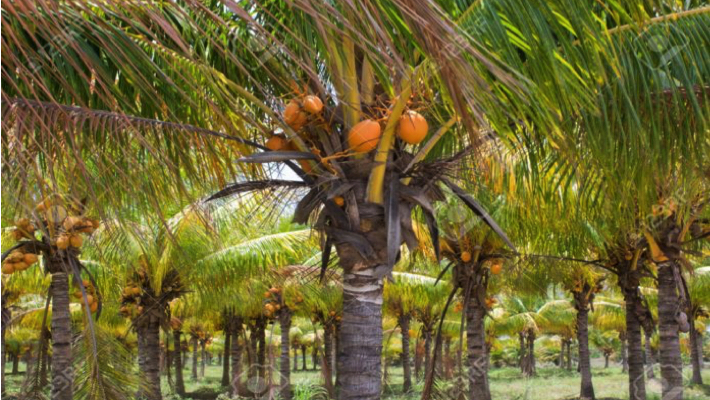
However, that is changing, as more people get educated about its potentials. One of such attempts is the move by Kazfield Integrated Services Ltd. The company has unveiled Àdàbà Farm and Resort, a 202-hectare coconut plantation in Owode, Ogun State. The scheme is aimed at reducing Nigeria’s $9.5 million annual coconut import bill and boosting local production.
According to a statement from the company, the initiative marks a bold step toward self-sufficiency in coconut production, leveraging modern, sustainable farming techniques to meet both domestic and export demands.
Nigeria currently spends nearly $9.5 million annually importing coconuts—mostly from Ghana and Côte d’Ivoire—despite having favourable tropical conditions for cultivation. The country ranks 19th globally among coconut suppliers, far behind major producers such as Indonesia, the Philippines, India, and Brazil.
Kazfield said the Àdàbà project aims to “change that narrative” through drought-resistant hybrid varieties, precision irrigation, and organic pest management, all designed to improve yields and ensure premium quality produce.
With the global coconut market valued at $14.18 billion in 2025 and projected to hit $33.71 billion by 2034, the firm sees vast potential for Nigeria to capture a significant share of the booming demand for coconut water, virgin coconut oil, and other derivatives — all of which are increasingly popular among health-conscious consumers.
Kazfield added that the project will create thousands of direct and indirect jobs, empower rural communities through training, and stimulate industries such as processing, packaging, and logistics.
The company’s Chief Executive Officer, Dr. Kazeem Yekinni, described the project as “more than a farm — it’s a catalyst for economic sovereignty.” Kazfield, according to its CEO, is about to put coconut on the list of agriculture products that will improve the contribution of agriculture to the national GDP.
Hear him; “By harnessing the coconut market’s explosive growth, Àdàbà Farm will position Nigeria as Africa’s coconut hub, fostering wealth creation and sustainable development for generations.”
Yekinni further revealed that investors in the project could earn guaranteed annual yields of ₦6 million to ₦12 million per acre for up to 50 years, backed by climate-risk insurance and professional management oversight.
In doing this, Kazfield does not want to be selfish, because it is goaded by national development rather than profit. So, it has invited both institutional and individual investors to participate in what it called a transformative venture aligned with Nigeria’s Economic Recovery and Growth Plan (ERGP) — one that promises to cut import dependence, boost export earnings, and strengthen food security.