



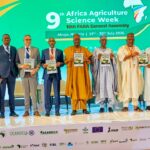


The Federal Government has announced the operationalisation of the National Agricultural Development Fund (NADF) to strengthen agricultural research, technology development and commercialisation in Nigeria.
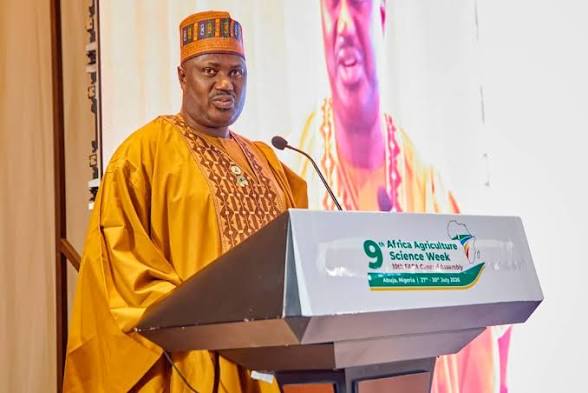
The Minister of Agriculture and Food Security, Senator Abubakar Kyari, announced this on Wednesday, July 29, 2026, during Nigeria Day at the 9th Africa Agriculture Science Week in Abuja.
Kyari said the fund would provide a more sustainable financing mechanism for research and help bridge the gap between scientific discoveries and commercial applications.
“A landmark achievement in this regard is the operationalization of the National Agricultural Development Fund. The Fund provides a more sustainable mechanism to support research, technology development, enterprise creation, value-chain modernization, and private-sector participation,” Kyari said.
He said the Federal Government had placed agriculture at the centre of its economic renewal and food security agenda under President Bola Ahmed Tinubu.
Kyari listed digital agriculture, mechanisation, climate-smart production, seed systems, value-chain-based extension, livestock development, irrigation, value addition and the marine and blue economy as priority areas.
He said future food security would depend not only on increasing cultivated land but also on expanding agricultural knowledge and innovation.
“Agricultural research is therefore no longer viewed as a supporting function but as a strategic national investment that drives productivity, resilience, competitiveness, and long-term prosperity,” he said.
The Minister identified five strategic priorities for the sector: strengthening scientific excellence; expanding digital transformation through artificial intelligence, remote sensing, GIS and data analytics; commercialising research and increasing private-sector participation; investing in human capital and youth; and deepening partnerships with regional and international agricultural institutions.
He said the government was also strengthening digital advisory services to ensure research findings reached farmers more quickly through collaboration among researchers, extension workers and agribusinesses.
Kyari said the Agricultural Research Council of Nigeria and National Agricultural Research Institutes were being repositioned through investments in laboratories, digital data systems, scientific equipment and institutional governance.
He said Nigeria would focus on artificial intelligence, biotechnology, robotics, remote sensing, genomics and other digital technologies to develop a competitive and climate-smart research system.
“The future belongs to nations that invest in knowledge as deliberately as they invest in infrastructure. Nigeria has made that choice. We choose science as the foundation of food security, innovation as the driver of prosperity, and partnership as the pathway to sustainable agricultural transformation,” he said.
Kyari said Nigeria also aimed to become a regional centre of excellence in agricultural research and innovation.
He added that the country would work with FARA, the African Union, AUDA-NEPAD, CGIAR centres, regional economic communities and other partners to strengthen Africa’s agrifood system.
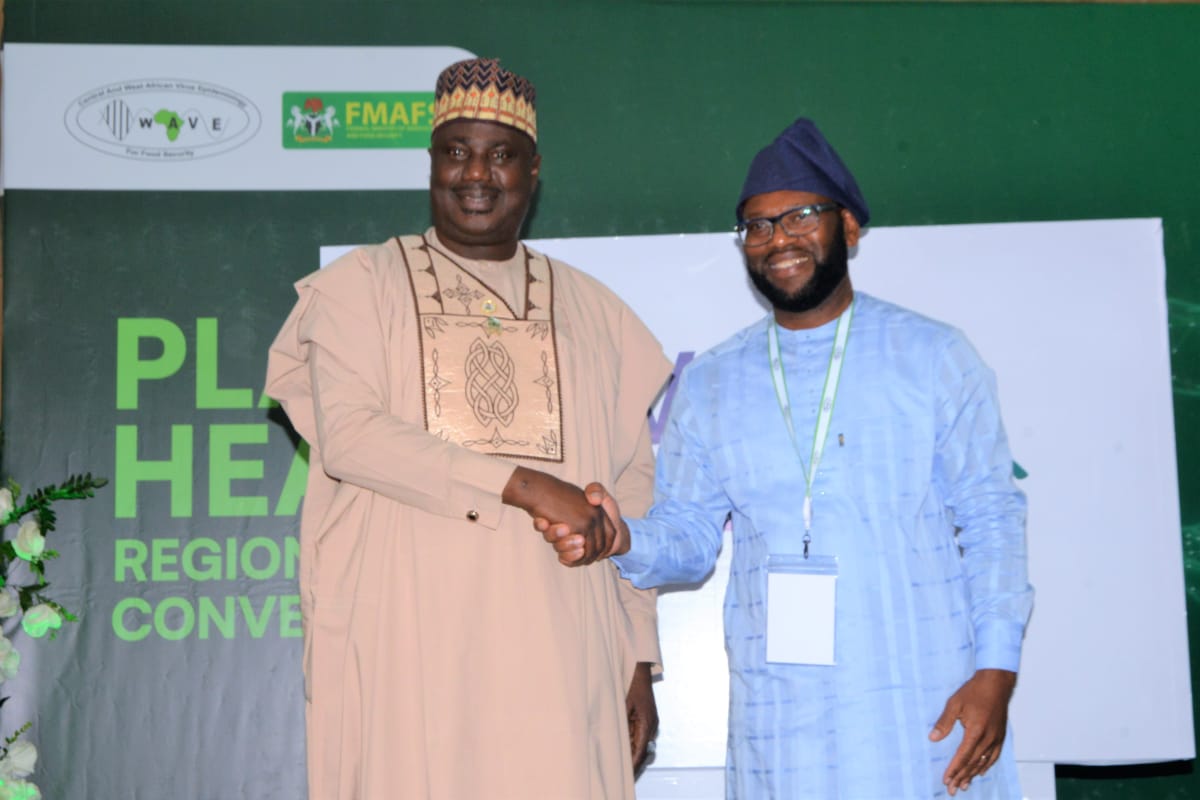
The Minister of State for Agriculture and Food Security, Senator Aliyu Sabi Abdullahi, said Nigeria Day provided an opportunity to showcase the country’s agricultural research and innovation capacity.
“Today is a special occasion for us because it provides an opportunity to showcase Nigeria’s agricultural journey while celebrating our shared African commitment to science, innovation and partnership in transforming our agri-food systems,” Abdullahi said.
He said Nigeria’s National Agricultural Research System comprised 16 National Agricultural Research Institutes and 18 Federal Colleges of Agriculture working with universities, development partners, private-sector organisations and farming communities.
“Our progress must contribute to Africa’s progress. The innovations we develop, the partnerships we nurture, and the policies we implement must strengthen the collective capacity of our continent to feed itself, create jobs for its youth, protect its natural resources, and compete successfully in the global agricultural economy,” he said.
Abdullahi said Nigeria Day featured technology exhibitions, keynote presentations, case studies, a Commissioners’ Fireside Chat and a Youth Innovation Challenge.
The event also recognised Prof Chiedozie Ngozi Egesi, Executive Director and Chief Executive Officer of the National Root Crops Research Institute, Umudike, as one of the 40 recipients of the 2026 Top Agri-food Pioneers recognition.
The statement was signed by Ezeaja Ikemefuna, Head, Department of Information, Federal Ministry of Agriculture and Food Security, on July 29, 2026.